IMPORTANT JUDGMENT - EXCLUSIVE ANALYSIS
European justice forces banks to immediately return unauthorized payments: what it means for gambling operators
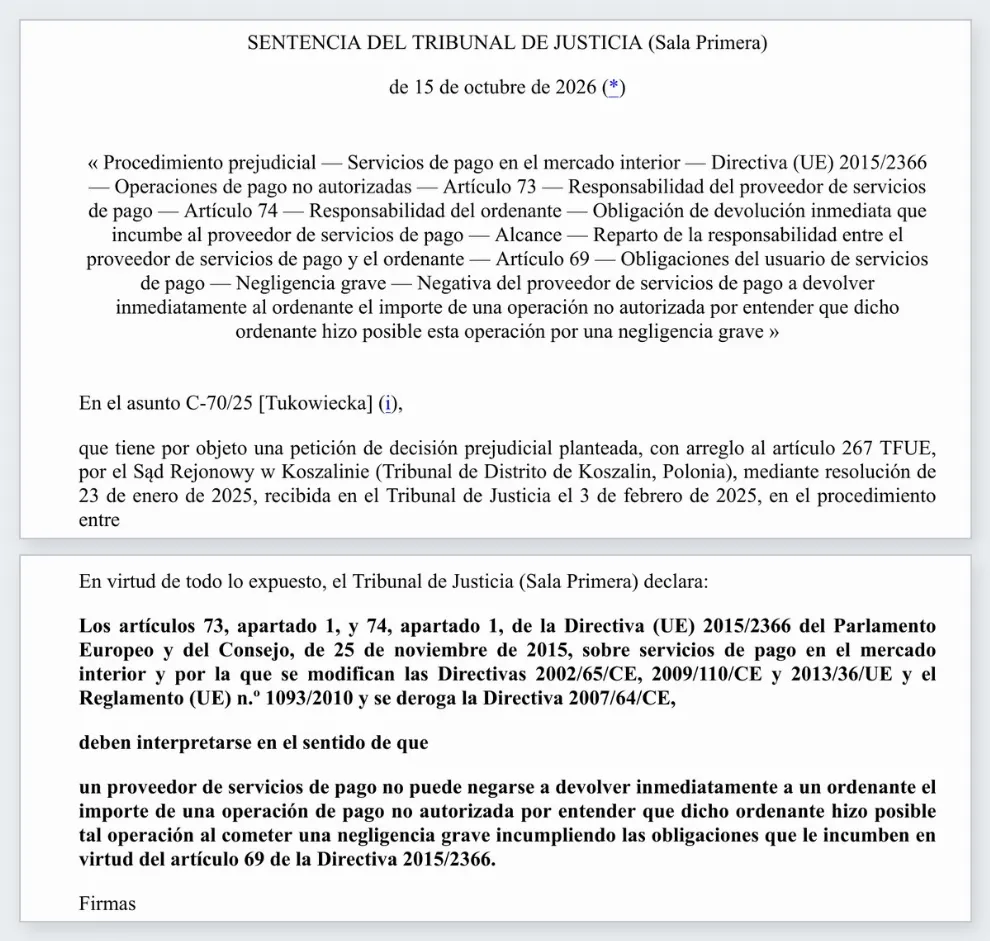
The ruling clarifies that the chargeback must occur first and that the possible gross negligence of the user must be discussed later, a doctrine with implications for payments, chargebacks and prevention of fraud in online gambling. The ruling does not impose obligations on operators, but may increase claims on deposits.


The Court of Justice of the European Union has issued today, October 15, 2026, a judgment (case C-70/25) that strengthens the protection of users against unauthorized payments. According to the ruling, a payment service provider – a bank, a payment institution or an electronic money institution – cannot refuse to immediately refund the amount of an unauthorized transaction on the grounds that the customer made it possible through gross negligence.
The case comes from Poland. A customer of PKO BP bank was the victim of phishing fraud: she entered her online banking passwords on a fake website and a third party withdrew 3,000 zlotys (about 705 euros). The bank refused to return the money because it considered that she had acted with gross negligence. The Court of Justice dismisses her.
First return, then claim
The ruling interprets articles 73 and 74 of the European Payment Services Directive (2015/2366), known as PSD2. In Spain, it was incorporated into law by Royal Decree-Law 19/2018. The keys to the ruling are:
In the words of the court, Article 73 imposes immediate return, while Article 74 regulates "the sharing of responsibility" between the supplier and the customer "at a later stage".
What changes for gambling operators?
Directly, nothing. The ruling refers to the relationship between the customer and his payment provider. Online gambling operators are, in that chain, the recipients of the payments (the players' deposits), not those who execute them. The ruling does not impose new obligations on them and does not release them from any: their duties of identification and verification of players do not depend on this rule.
Indirectly, the sector may notice some effects:
What the sentence does not change
The final distribution of losses remains the same. If the customer acted fraudulently or with gross negligence, he ends up bearing the losses, even if the supplier must first return and claim later. Nor does it affect the only exception provided: the customer's own well-founded suspicion of fraud, reported in writing to the authorities.