U.S. Requires Predictive Markets to Operate Without Territorial Restrictions, as Courts Order Blocks
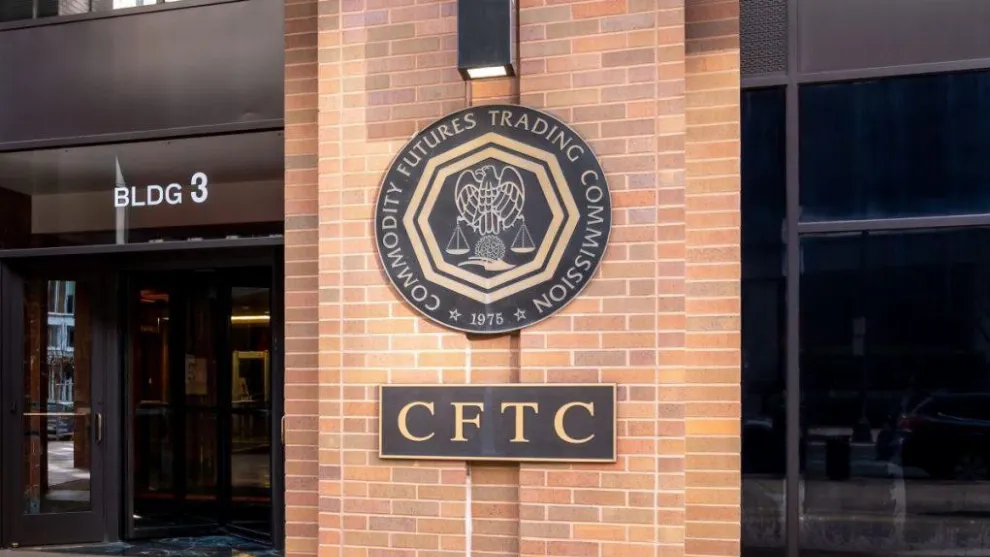
The U.S. Futures Trading Commission requires predictive markets to justify their territorial restrictions in the midst of a conflict with gambling authorities
The United States has just opened a new front in the regulatory battle of predictive markets.


The Commodity Futures Trading Commission (CFTC), the federal body that oversees futures and derivatives markets, has given authorized markets under its supervision 30 days to remove national geographic restrictions contrary to its fair access rules or justify why they are unable to do so.
The decision, officially announced on November 5, has special importance for platforms such as Kalshi, which market contracts on future events and have conflicts with different US authorities over their activity related to sports betting.
What does it mean to remove territorial blockades?
In the United States, the same predictive market can offer its contracts in certain states and restrict them in others due to different rules of the game or by court decisions.
These restrictions are applied through geolocation systems that identify where the user is accessing from and prevent them from contracting certain products when they are in an excluded territory.
The CFTC considers that this fragmentation is generally incompatible with the requirements of open and fair access that registered derivatives markets must meet.
Its chairman, Michael S. Selig, argues that derivatives markets should operate uniformly on a national scale.
The interpretation is based on section 38.151(b) of the US federal regulations and affects the so-called Designated Contract Markets, i.e. markets of contracts designated and supervised by the CFTC.
The requirement also indirectly applies to intermediaries providing access to those markets, since authorised platforms must verify that their distributors do not introduce restrictions contrary to the rules of fair access.
But the CFTC has not declared all predictive contracts legal or overturned existing court bans. Markets that are unable to remove the locks have the same 30-day window to submit an explanation to the supervisory body.
Kalshi and the problem of court orders
The contradiction is especially visible in California.
On Nov. 4, just one day before the CFTC's announcement, U.S. District Judge Jacqueline Scott Corley ordered Kalshi to stop offering sports contracts on the plaintiffs' Indigenous communities' territories.
The ruling affects Kalshi Inc. and KalshiEX and is limited to those territories, not the whole of California. In addition, it requires the platform to inform the court of the measures taken to comply with the ban.
The origin of the conflict lies in the legal consideration of these products: while Kalshi maintains that its contracts are part of a derivatives market subject to federal supervision, the plaintiff indigenous communities consider that certain sports contracts constitute gambling activities subject to their own regulations.
The Ninth Circuit Court of Appeals had already endorsed in September the likelihood that indigenous communities would succeed in their claim and had rejected that federal derivatives legislation automatically displace the competencies recognized by indigenous gambling regulations.
The CFTC's new interpretation does not resolve this conflict of jurisdiction. An administrative instruction on market access does not, by itself, render ineffective a court order.
And what is happening in Spain?
The Spanish situation allows us to appreciate the extent to which the authorities are adopting different approaches to the same phenomenon.
The Directorate General for the Regulation of Gambling (DGOJ) announced on May 26, 2026 the opening of disciplinary proceedings against Polymarket and Kalshi for their alleged unauthorized activity in Spain and ordered the blocking of their websites as a precautionary measure.
The DGOJ considers that prediction markets are gambling in nature when they allow betting on uncertain future results and that their operation in Spain requires the corresponding administrative authorization.
For its part, the European Securities and Markets Authority (ESMA) recalled on July 3 that certain contracts on future events can be classified as derivative financial instruments and be subject to European restrictions on binary options.
ESMA also recognises that these products may constitute bets under national gambling laws.
Therefore, the US decision does not modify the legal obligations of Kalshi, Polymarket or any other platform that intends to offer its services in Spain.
What it does highlight is the problem that regulators will still have to face: determining when a contract on a future event should be treated as a financial product, when it constitutes a gamble, and which authority has the competence to supervise it.