A new study in the UK puts the drop in household spending at 40%. Spending on Gambling was reduced by 25%

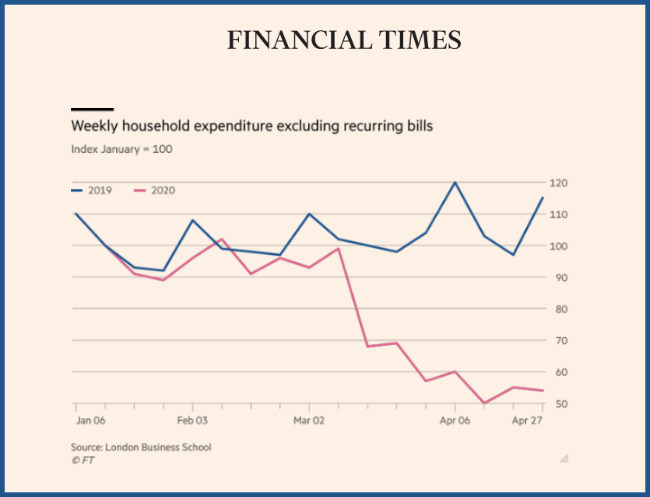
The gaming sector, with a drop of close to 35%, is one of the segments that has most noticed the impact of the crisis due to Covid-19, according to a latest study published in the United Kingdom, which increases the drop in gaming by 10% more. British household consumption of 30% estimated by the Bank of England last week. In this latest study, based on the financial information of 30,000 people who use the Money Dashboard application, it is estimated that household spending in April collapsed by 40% compared to the same month of 2019.


Financial Times highlights in its edition this Saturday, how household spending in the United Kingdom fell more than 40 percent in April, according to real-time data from a large survey provided by a specialized agency that has data issued by several of The country's largest banks, suggesting that the Bank of England was even overly optimistic in its assumptions when it predicted that the coronavirus crisis would lead to the worst recession in more than 300 years. In its assessment last week, the central bank reported data showing a "reduction in the level of household consumption of about 30 percent."
But the London Business School investigation we're referring to showed that spending had fallen much more last month than the Bank of England's estimate, while revenue had come under increased pressure, leading to some families to borrow more and exacerbated inequality.
Thus, an estimated 40% drop in household spending does not simply translate into a big problem for GDP (gross domestic product), but suggests a deeper slowdown than the Bank of England or the Bureau of Budgetary Responsibility have predicted.
The study used anonymous financial information for more than 30,000 people from the Money Dashboard app, which links to all users' bank accounts, debit and credit cards, allowing researchers to see exactly where spending was hit hardest.
The data provided by the study, which is part of a large research project on the economy of the pandemic, will increase pressure on the government to further reduce the blockade and try to boost the economy.

Throughout April, the sample found that average total weekly spending, including recurring bills, fell 41.2 percent compared to the same month in 2019.
Spending on services fell 44%, while in restaurants it decreased 30% in the year and in the gaming sector approximately 25%. Groceries increased less than 1 percent on the year, but sales of alcohol and tobacco increased 19 percent, according to the study.
Total spending fell sharply in the third week of March, before the Prime Minister imposed the blockade on March 23, and remained relatively stable throughout April at a very low level.
Signs of increased income stress also grew through April, according to the study. Those whose incomes had fallen were on average 30 percent worse, a very large increase from March to February. More than 15 percent of people experienced falls in income of more than 50 percent.