MARKET ANALYSIS (sponsored by GMONITOR)
Affiliation in the gaming sector: the crisis of SEO projects and the boost of content creators
The sector is moving towards a multi-channel ecosystem led by content creators and digital communities, which promises more qualified players, better conversion and greater retention just as the new sports season starts. Infoplay analysis with sponsorship from GMONITOR.


One of the realities that we are going to witness in this new season, starting with sports betting, is how affiliation in the sector is evolving from traditional SEO to a model driven by content creators and digital communities. This change allows you to attract more qualified players, improve conversion, increase retention and optimize user value in the long term.
In our previous article on trends in sports betting, we pointed out that the new changes seen at the product and marketing level in this vertical are due to an evident change in user behavior. A reality that is 100% applicable to the reality of affiliation, which sees how the dominant model over the last fifteen years gives way to new actors, mainly content creators, streamers and their communities.
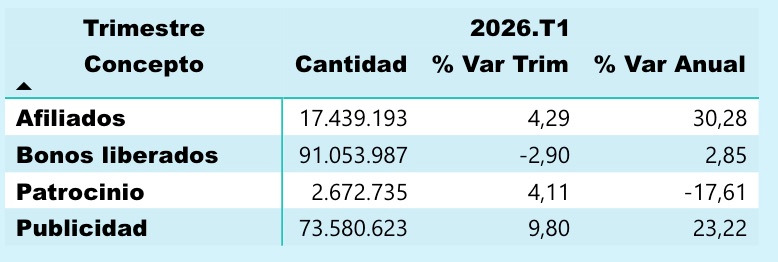
Affiliate marketing spending grew in the first quarter of 2026
Traditional SEO... replaced by AI and a multi-channel system
For many years, the formula for success in online gambling affiliation was relatively simple. An affiliate identified keywords with purchase intent – such as "best online casino", "no deposit bonuses" or "bookmakers" – developed content optimised for search engines and competed to reach the top positions on Google. The organic traffic generated was later converted into registrations and first deposits through affiliate links.
Obviously, the greater the value provided to the user (odds comparator, information on bonuses, news, educational and strategic content, etc.), the more likely it is for the user to register with an operator through one or another affiliate.
That balance began to deteriorate with the successive updates of Google's algorithm, especially in sectors classified as Your Money or Your Life (YMYL), where the demand for experience, authority and trust is considerably higher. Added to this were the appearance of channels such as Telegram or Discord with tipsters, the restrictive regulation on the possibility of making paid campaigns on Google (SEM), the obligation of +18 in portals where games are promoted and more recently the implementation of AI Overviews and other generative response formats. which reduce the number of clicks to traditional pages and modify the user's behavior within the search engine itself.
The current reality for projects aimed at organic positioning on Google is that half of searches no longer end in clicks. So potential users no longer follow a linear journey before signing up with an operator. Instead of directly searching for a brand, they consume explainer videos, follow live broadcasts, participate in specialized forums, and consult recommendations within communities where other players share real experiences.
While Google competes with ChatGPT, Gemini or Claude to answer specific questions, platforms such as YouTube or Twitch allow you to observe the product in operation, solve doubts in real time and generate a much more authentic perception.
As a result, affiliation evolves towards a multichannel model in which SEO, video, social networks, newsletters and private communities work in a complementary way. The objective is no longer only to attract visitors, but to accompany the user during different moments of their decision process.
Content creators as new trusted intermediaries
While traffic from search engines becomes more uncertain, another ecosystem continues to grow strongly: that of content creators.
YouTube, Twitch, TikTok, Telegram, Discord, Kick, podcasts or even specialized newsletters are generating communities where the relationship between creator and audience is much closer than that between a user and a website found on Google. The recommendation is no longer anonymous but becomes an ongoing conversation.
In sports betting, this phenomenon is particularly evident. Tipsters, sports analysts and specialized creators generate daily content, comment on matches in real time, explain strategies and maintain constant interaction with their community. The decision to register with a trader is no longer born solely from comparing bonuses, but from the trust accumulated over months by following a particular creator.
This change completely modifies the logic of affiliation. The affiliate stops competing just to appear first on Google to build a personal brand capable of influencing an audience of their own. Conversion no longer depends exclusively on the moment of search, but on the previous relationship between creator and user.
It is no coincidence that numerous affiliate programs are strengthening their presence among influencers, streamers and digital communities. The objective is no longer only to increase the volume of registrations, but also to access profiles with greater affinity for the brand and prior knowledge of the product. This evolution also coincides with a broader trend in affiliate marketing, where video content and social formats are gaining weight over the model based exclusively on traditional websites.
The quality of the user, above the volume
For years, a significant part of the industry evaluated the success of an affiliate campaign mainly by the number of registrations or first deposits obtained. However, this vision so common in agreements with tipsters in the last decade is becoming more and more limited.
The current trend in affiliation departments is to settle for registrations, but of more value. Thus, the conversation that revolved around the cost per acquisition and the number of first deposits generated by each affiliate begins to be sufficient.
Operators are increasingly working with predictive models capable of estimating the future value of a player. The goal is no longer just to attract users, but to attract players who remain active, deposit regularly, and maintain a long-lasting relationship with the brand.
In this context, indicators such as Lifetime Value (LTV), retention, game recurrence or return on investment acquire a greater relevance than the simple volume of registrations. A creator capable of generating a hundred highly active players can be much more profitable than an SEO portal that provides a thousand users with a high abandonment rate.
This logic also modifies the way affiliates are evaluated. The quality of traffic begins to weigh as much or more than its quantity. Operators today have much more sophisticated CRM, analytics and attribution tools that allow them to identify which channels generate greater economic value in the long term.
As a result, membership evolves from a volume-oriented model to one focused on business efficiency. It's a transition that brings membership closer and closer to data-driven marketing and actual customer performance throughout their lifecycle.
The specialized affiliate (poker schools, odds comparators, tipsters...) continues to be supported by operators as they give greater importance to metrics related to the player's subsequent behavior; while other acquisition channels through third parties (traditional graphic banners on different types of websites, ads visually integrated between news or content or the purchase of advertising space through programmatic advertising platforms and audience segmentation) continue to have quantitative value, to attract as many users as possible.
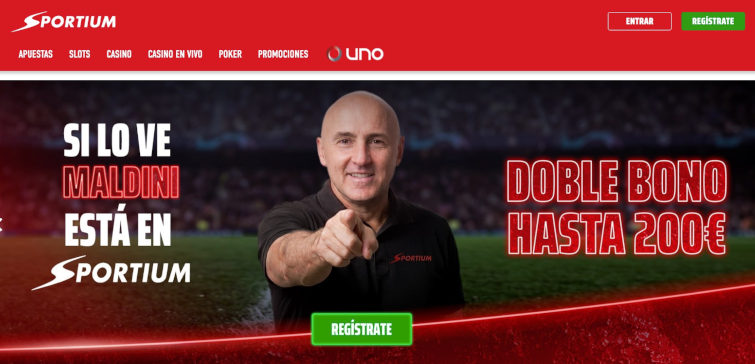
But in addition to influencers with millionaire audiences (such as Julio Maldonado "Maldini" of Sportium himself) or with constant public attention (such as Luis Figo of Betfair), the niche of specialized creators offers that same advantage: by targeting very specific audiences, they generate a pre-filtering process that improves the quality of traffic. A user who regularly follows content about strategic poker will probably have different expectations than someone who impulsively accesses from a generic search motivated solely by a welcome bonus.
This segmentation allows operators to develop much more efficient strategies from the first contact. Thanks to the contextual information provided by the source channel, it is possible to tailor promotions, CRM communications, product recommendations and even cross-selling campaigns between casino, sports betting or poker.
Trust, brand and first-party audiences
From what we're presenting, it's clear that the great battle of today's affiliation won't just be fought at Google. And neither through traditional affiliate programs (CPA, Revshare or mixed models) but were built around websites capable of generating large volumes of organic traffic with the support of audiovisual formats, podcasts or tools and services that add value.
As a result, business relationships tend to be more flexible. And although campaigns incorporate personalized promotional codes, specific links for specific content, the weight of branding in these agreements is becoming more and more important and the use of advanced attribution tools is becoming less important.
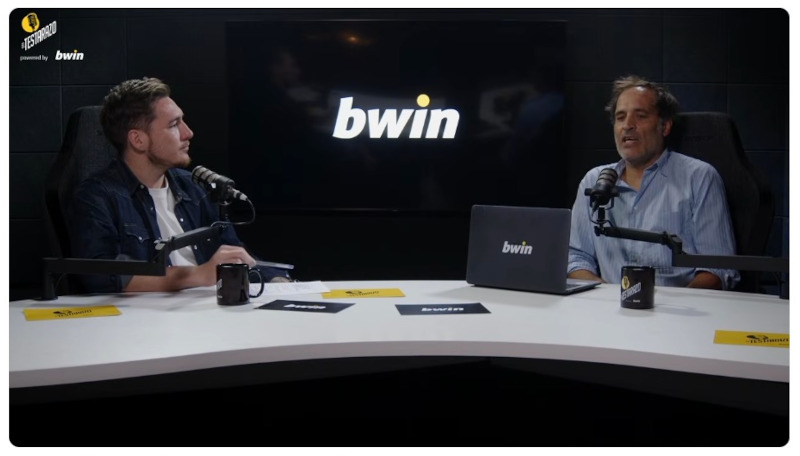 El Testarazo, a YouTube program sponsored by Bwin
All this favors an ecosystem where transparency, content quality and regulatory compliance are becoming increasingly important. Affiliation thus enters a stage of greater maturity. Less dependent on a single channel, more data-oriented, and much more focused on the quality of the relationship with the user.
Large projects will still need SEO, but sustainable growth will increasingly come from the combination of specialized content, credibility and communities capable of generating trust in a digital environment where attention has become the scarcest resource.
The evolution of affiliation that we have pointed out in this INFOPLAY SPECIAL in August, reflects a much deeper change than the appearance of new recruitment channels. What's transforming is the way users discover, evaluate, and choose a gaming brand. Trust, specialization, and continuous engagement are progressively displacing models based solely on organic positioning and traffic volume.
That's where GMONITOR comes in, the market intelligence platform that allows operators, suppliers and affiliates in the gaming sector to monitor in real time the activity of their competitors: active sponsorships, marketing campaigns, promotions and presence in digital media. In a context where competitive advantage is no longer decided only in Google's ranking, but in the ability to identify in time which communities and creators are moving to the market, having reliable and up-to-date data makes the difference between reacting late or anticipating.
More information: gmonitor.ai
MAKE AN APPOINTMENT ONLINE hakon@gmonitor.ai