The DGOJ tackles money laundering and illegal gambling in Europe
The meeting of European regulators held in Germany analyzes new tools to block illegal platforms, share information between countries and face the challenges of prediction markets.


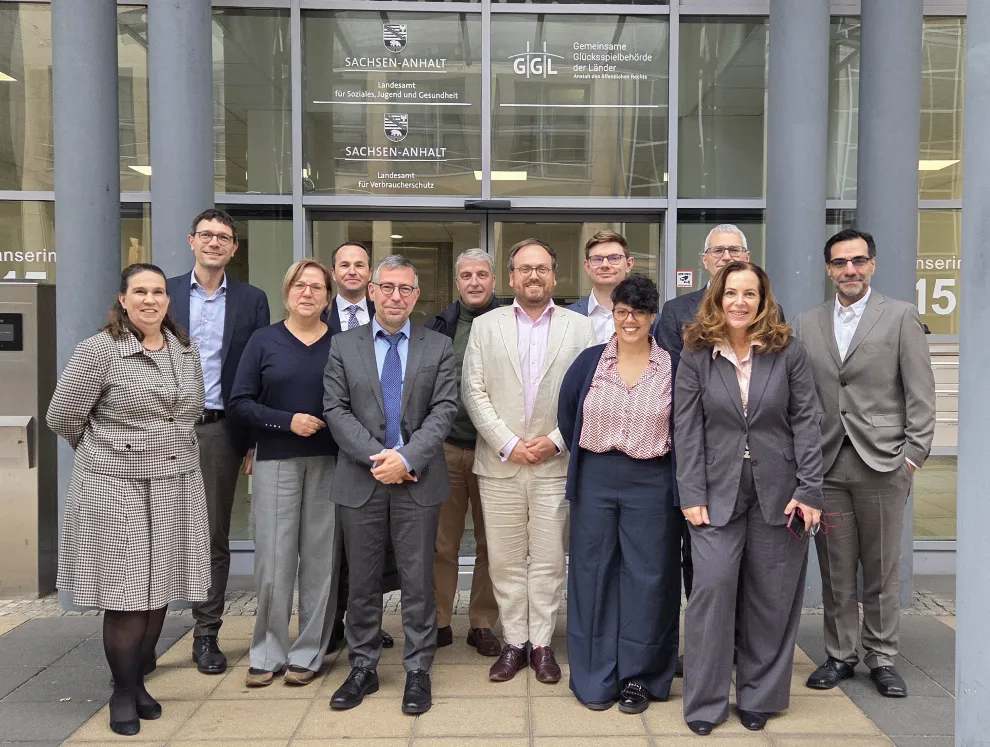
The Directorate General for the Regulation of Gambling (DGOJ) has participated in Halle (Germany) in a meeting of European regulators focused on the fight against illegal gambling, predictive markets and international cooperation. Among the issues discussed is also the prevention of money laundering, especially relevant in Spain after the entry into force of Royal Decree 813/2026 on October 28.
Precisely, in an exclusive interview with INFOPLAY that we also published this Monday, Jdigital warns of the technical difficulties and legal uncertainty posed by the application of the new ownership control of means of payment. The association calls for greater coordination with the DGOJ and Sepblac, as well as deadlines consistent with the adaptations that operators need.
Although the official statement does not indicate that Royal Decree 813/2026 was specifically addressed during the meeting, the thematic coincidence allows the concerns that the sector is conveying to be contextualized.
We reproduce the DGOJ's statement in its entirety:
• The meeting addressed the exchange of information on illegal websites and applications, prediction markets and measures to block unauthorized platforms.
• The DGOJ has also shared the main results of the impact analysis of the regulation of commercial communications of gambling.
Halle, 4 November 2026.- The Directorate General for the Regulation of Gambling (DGOJ), under the Ministry of Social Rights, Consumer Affairs and Agenda 2030, has participated in the meeting of European Regulators held in Halle (Germany), a meeting aimed at sharing regulatory advances and supervisory experiences, as well as strengthening cooperation between authorities in the face of the challenges posed by the gambling market.
Representing the DGOJ were Eugenio Álvarez, Deputy Director General of Gambling Regulation, and Cecilia Pástor, Deputy Director General of Gambling Inspection. The agenda paid special attention to collaboration tools to combat illegal supply, the development of prediction markets and the effectiveness of measures to block unauthorized websites and applications.
Information sharing to combat illegal gambling
One of the main issues addressed was the proposal to create a joint portal to share up-to-date information on websites and applications identified as illegal. The initiative, presented by the United Kingdom, seeks to facilitate the exchange of data between regulatory authorities and improve the coordination of actions against operators that offer services without the required authorisation.
The meeting also dedicated a specific session to the blocking of IP addresses, in which experiences, results and difficulties in the application of these measures were shared. The debate made it possible to analyse the technical and operational challenges posed by preventing access to unauthorised platforms, as well as the possibilities of strengthening the effectiveness of actions through greater international cooperation.
Prediction markets, among the new regulatory challenges
Prediction markets have occupied another of the blocks of work, with a sharing of the current situation in the different participating jurisdictions. The exchange has made it possible to address the challenges posed by these platforms and the need to analyse their activity in accordance with the regulatory framework applicable in each country.
Analysis of the regulation of commercial communications
The DGOJ presented the main results of the impact analysis of Royal Decree 958/2020, of 3 November, on commercial communications of gambling activities. The session allowed the conclusions of the evaluation and the regulatory lessons derived from the application of this regulation to be shared.
The meeting also included sessions on the prevention of money laundering, public communication and awareness-raising, as well as a sharing of the main regulatory developments of the participating jurisdictions during the second half of 2026.
The DGOJ's participation in this meeting is part of its commitment to cooperation between European regulatory authorities and the strengthening of supervisory tools. The exchange of information and experiences is essential to improve the response to the illegal gambling market, face the new challenges of the digital environment and move towards a safer online gambling environment.