Understood as a contrast between the practices of legal gambling and the Kick–Stake model, in this INFOPLAY SPECIAL we analyze whether the regulated online gambling sector can draw inspiration from the success model of Kick and Stake, two platforms that have broken molds in terms of revenue, virality, and permissiveness…
In a first section, we will explain what both companies are, and then delve into the success—based on deregulation—of both Kick (the streaming platform) and Stake (the crypto casino), in a formula that at first glance clashes with Spanish legality in numerous aspects.
What is Stake, how was Kick created, and what is their relationship?
Stake is an online casino founded in 2017 that began operations accepting only cryptocurrencies as a payment method, although it currently offers both cryptocurrencies and local currencies, providing sports betting and casino games on a global scale. Based in Curaçao, it has positioned itself as the benchmark crypto casino and is considered one of the three most important online gambling operators in the world, having surpassed 25 million users and generating multi-billion-dollar revenues, mainly in unregulated jurisdictions.
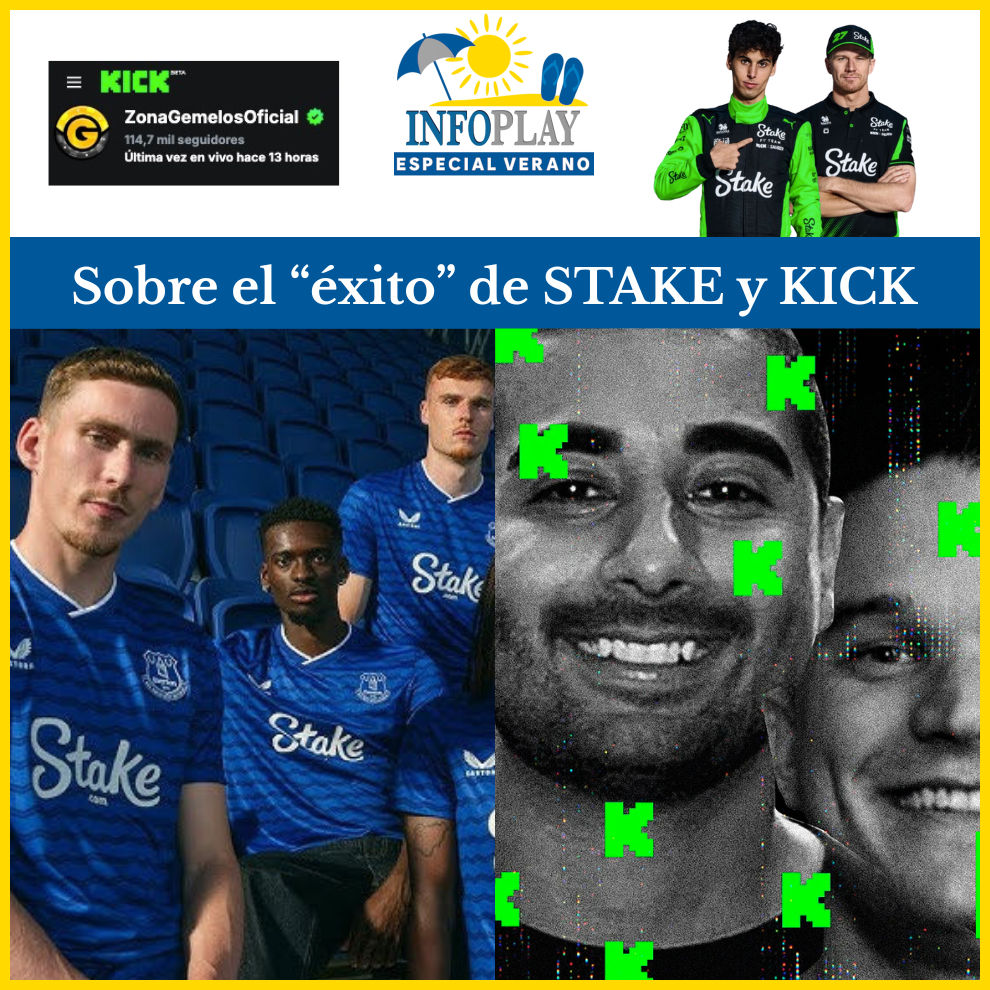
Kick, meanwhile, is a live streaming platform launched in December 2022 as a direct alternative to Twitch. Offering a much more favorable revenue-sharing model for content creators, it is controlled by Easygo Entertainment (Stake’s parent company), and although Stake did not officially invest in Kick, Ed Craven—co-owner of Stake—did so personally. In addition, both share strategic synergies: for example, Kick has been used as an alternative sponsor at events where gambling advertising is restricted, clearly reflecting a coordinated strategy between the two brands.
In short,
Stake is the financial and business origin that enabled the birth of
Kick, although both platforms operate independently in legal terms. Their relationship is based on shared ownership, aligned objectives, and a complementary approach to digital expansion: while Stake dominates in the betting and gambling sector, Kick aims to position itself as the new benchmark in live entertainment streaming, though with a heavy prioritization of content in the casino, slots, and video game categories.
The data confirms that the success of Kick and Stake is real, but built on foundations unacceptable for regulated gambling. Kick surpassed 2.1 billion hours watched in 2024 and signed contracts worth up to $100 million with streamers, all based on a filter-free model where gambling, adult content, or dangerous challenges coexist without effective sanctions—as was recently seen in the case of French streamer Jean Pormanove, who died live after degrading practices on his channel.
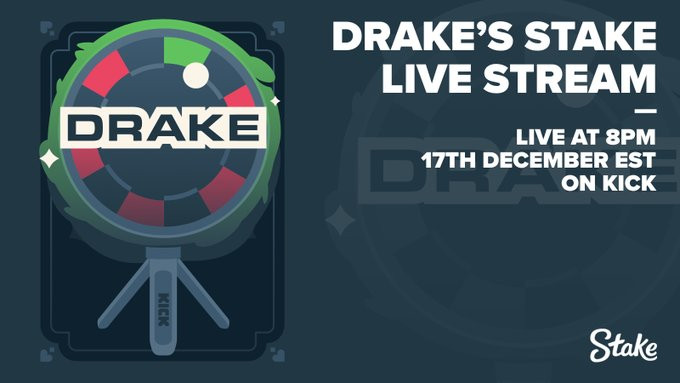
In conclusion, it would not be too bold to state that Kick would not exist without Stake, since its economic model would not be sustainable without the backing of the crypto casino; as is also being evidenced these days with the closure of rapper Drake’s Kick channel, one of the main promoters of Stake and Kick in their early days.
The Formula Behind Stake and Kick’s Success
Without necessarily going so far as to claim that Kick is not a live audiovisual platform but rather a tool for recruiting casino players, it is clear that the rise of Kick and Stake is inseparable from the context of digital liberalization and the lack of international regulation regarding cryptocurrencies and streaming content. Stake, founded in 2017, grew rapidly by operating out of Curaçao and accepting bets in Bitcoin, Ethereum, Litecoin, and other tokens. This allowed it to bypass many of the requirements imposed by traditional regulators and achieve great success among young crypto-savvy users who were looking for anonymity, fast transactions, and lower fees on gambling and betting platforms.
Kick was born in 2022 as a direct response to Twitch’s restrictions. Backed by the founders of Stake, it offered an irresistible model for streamers: almost total freedom in content and 95% of the revenue. This combination meant that in just two years it overtook Twitch in viewing hours in specific categories, particularly gambling and extreme content.
A Breeding Ground for Scandals
While regulated markets—such as Spain, under the supervision of the DGOJ—require age verification, responsible advertising, deposit limits, voluntary self-exclusion, and risk controls, these rules, the product of years of ethical and political debate, do not seem to apply in the case of Kick and Stake. And yet, for the past four years, the crypto casino appears to have been pursuing licenses to operate in regulated markets, as it has managed to do in Colombia and the United Kingdom.
Focusing on Stake and its trajectory in the UK, which began with massive expansion driven by extremely successful advertising through sponsorships and collaborations with celebrities and top-tier brands, the reality is that in March 2025 it renounced its license following an advertising scandal involving sensitive content on social media. This came despite having long operated as a near-model casino under local regulations, supported by the sponsorship of a leading English football team.
Despite having lost its license in the UK, Stake.com remains visible on the shirts of Premier League club Everton FC.
Beyond its exit from the UK and the current controversy involving the rapper who popularized the brand (Drake), Stake.us faces multiple federal lawsuits in 2025 (California, Illinois, Alabama, Massachusetts, South Carolina, and Minnesota). It stands accused of operating as an illegal casino under the guise of a sweepstakes platform—a model used by many brands to operate in a gray area within states where online gambling is regulated.
Another issue under FBI investigation is a hack estimated to have resulted in the theft of around $40 million in cryptocurrencies, attributed to the Lazarus Group hacking collective.
But if there is one aspect most criticized from a European responsible gambling perspective, it is Stake’s aggressive marketing strategy targeting young audiences, using influencers and cryptocurrencies as a hook—raising concerns about promoting irresponsible gambling behaviors.
The Double Reality in 2025
While traditional gambling companies struggle to make profits in an environment marked by competition, strict controls on commercial communications, and high taxation, the parallel universe of crypto casinos, led by Stake.com, has managed to build an empire that some studies value at $100 billion in gross gaming revenue. But the reality is that Stake also operates in regulated markets, and it is from there that we can primarily extract useful insights and contributions for the sector.
Scenario 1 – Stake.com Operating Outside Regulation
Under its Curaçao license, crypto casinos such as Stake often require minimum deposits 10 times higher than those on regulated sites, targeting committed players rather than casual ones. Another feature is offering an almost unlimited selection of gambling products, from all types of casino games, sports betting, and poker, to markets linked to financial bets or even celebrity death pools and wagers on events in war zones. In other words, content designed to generate social media “engagement” that funnels users toward more profitable casino games. And this is where its close relationship with the Kick platform makes complete sense.
Backed by ever-growing brand recognition and its status as the “leader” in crypto casinos, Stake also manages to attract young players who consume content related to cryptocurrencies, investments, eSports, and fast-growing sports disciplines in terms of social media and broadcasting rights, such as UFC and Formula 1.
In this context, both Kick and Stake demonstrate that outside the regulated framework it is possible to generate astronomical revenues—but at the cost of sacrificing safety standards, the protection of vulnerable groups, and responsible gambling practices. Their success is real, but from a legal perspective it is largely considered neither sustainable nor ethical.
Scenario 2 – Stake Entering Regulated Markets
With well-documented cases such as Colombia and the United Kingdom, it is known that Stake has explored acquiring licenses in markets like Spain or France, and more recently Brazil, Italy, or Peru. There has also been confirmation of interest in entering Denmark, Canada, and possibly Australia.
Focusing on the case of Colombia, Stake opted to acquire the license of Betfair Colombia. In November 2023, Stake (through its parent company Easygo) purchased Betfair Colombia, including its operating license, which allowed it to launch its regulated platform in Colombia under the domain stake.com.co. This license enables it to operate legally until 2025 and has been one of the markets where it has carried out the most noteworthy actions. Among them, a striking measure in response to the introduction of a 19% VAT on deposits in online betting platforms announced last year by the regulator COLJUEGOS.
Thus, Stake Colombia launched a promotion called “Cashback IVA”, through which it still compensates users for the VAT applied to their deposits: for example, when a player makes a deposit, the 19% corresponding to VAT is deducted, as required by the new regulation. However, Stake immediately credits a bonus equivalent to the deducted VAT amount, so users can effectively play with the full amount they deposited. For example, if you deposit COP 100,000, COP 15,999 is deducted for VAT, but Stake gives you that same amount as a bonus in your account.
Its presence in sports sponsorships (Fortaleza CEIF) and influencer channels (Westcool) has enabled it to secure a solid market share, having built a real operational base in Colombia with an office in Bogotá and a legal subsidiary in the country, multiplying the size of its team in Colombia sixfold and betting on local talent.
In addition, Stake.com.co has proven effective not only in confirming its financial commitment to the country but also by standing out with measures for gambling addiction prevention.
Is the Kick–Stake Duo a Threat to Regulated Gambling?
For the legal online gambling industry, especially from the perspective of regulated markets, the existence of Kick and Stake represents a reputational threat. Even though they do not operate under the same rules, many users do not distinguish between “legal gambling” and “visible gambling.” This undermines trust in the sector and weakens efforts to consolidate a culture of safe and responsible gambling.
Consumer and addiction-prevention associations, such as FEJAR or Fundación ANAR, see Kick as a direct threat to minors. They warn that its youthful aesthetics, influential figures, and casual tone camouflage the seriousness of the content it promotes. “It normalizes betting as everyday entertainment,” they point out in reports.
The conclusion emerging from the data, sources, and analysis is blunt: what has worked in these projects is neither replicable in regulated markets nor consistent with the principles of responsible gambling.
The future of online gambling depends on combining innovation and responsibility, technology and regulation. Partial lessons may be learned—about revenue sharing, interaction, or usability—but the essence of Kick and Stake is not exportable. On the contrary: their existence compels a stronger regulatory framework and a clearer distinction than ever between what is legal and what is merely lucrative.
18+ | Juegoseguro.es - Jugarbien.es