Gambling, the third sector with the highest absenteeism in Spain: absences rise one point in one year
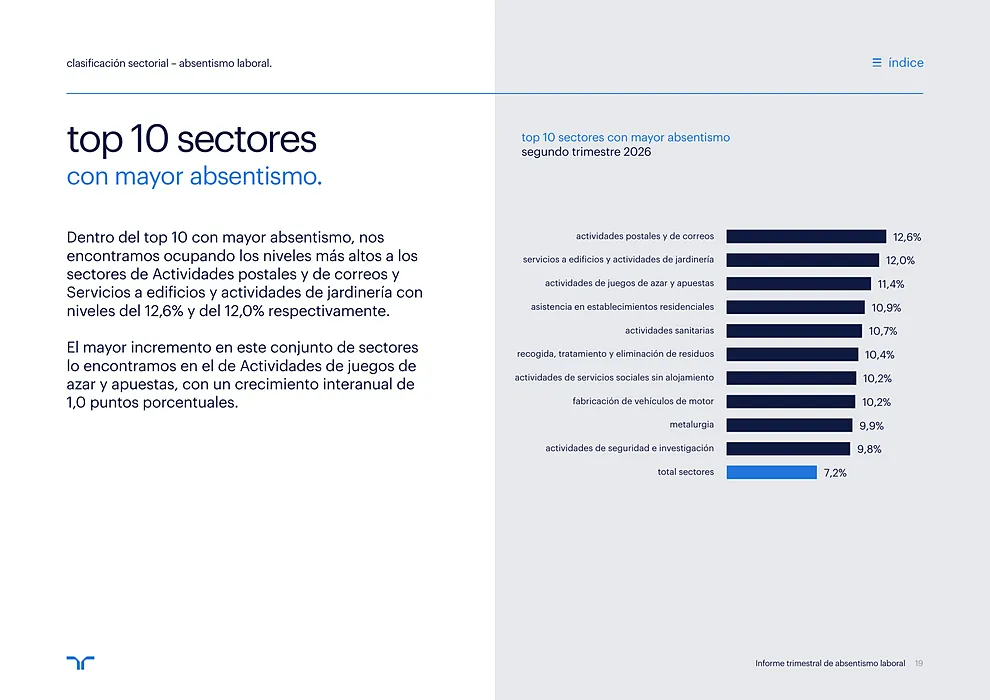
Randstad Research places the sector's rate at 11.4% of the agreed hours, compared to 7.2% on average.


Absenteeism continues to be one of the pending issues in the Spanish labour market, and our sector is no exception. According to the latest Quarterly Report on Absenteeism from Randstad Research, the think tank of the human resources company Randstad, gambling and betting activities lost 11.4% of the agreed hours in the second quarter of 2026. This is the third highest rate in Spain. It is only surpassed by postal and postal activities, with 12.6%, and building and gardening services, with 12%.
To situate the figure, it is worth explaining what it measures. The absenteeism rate includes the percentage of working hours set in contracts that are not worked, for whatever reason, including medical leave. The report is prepared with data from the Quarterly Labour Cost Survey of the National Institute of Statistics. The average for all sectors is 7.2%.
The most striking data is the trend. A year ago, the gaming sector was at 10.4%, so absenteeism has risen by one percentage point. It is the largest increase among the ten sectors with the most absences, in a year in which the national average only grew by two tenths.
If we look only at temporary disability, i.e. medical leave, gambling loses 9.9% of the agreed hours, compared to 8.9% a year earlier. It is the second sector in Spain in this section, only behind building and gardening services (11.1%). The national average for medical leave is 5.6%. In other words: almost nine out of every ten hours lost in the sector are due to medical leave.
The phenomenon is general. Randstad Research estimates that an average of 1,637,174 people in Spain stopped going to work every day, of which 1,274,528 were on medical leave. For its director, Valentín Bote, "absenteeism has been consolidated as a structural drag on productivity". The report does not analyse the causes sector by sector.
The issue has been a concern for gaming companies for some time. In July we told them that gambling and betting activities were already among the branches with the highest absenteeism. Then the president of the trade fair employers' association responded that the data should serve "to improve, not to stigmatize". The bingo employers' association had already sounded the alarm in 2025, and just a few weeks ago the employers asked to recover the dismissal due to repeated medical leave. The figures confirm that the management of the workforce will continue to be at the top of the sector's agenda.
SEE: Randstad Research, Quarterly Report on Absenteeism (September 2026), with data for the second quarter of 2026 prepared from the Quarterly Labour Cost Survey of the National Institute of Statistics.