The transformation of the sports bettor and how operators adapt their offer
Sports betting trends in Spain for the new 2026-2027 sports season

There are just 10 days left until the start of LaLiga 2026-2027 and sports betting operators are adapting their offer to a new user profile: more markets on individual performance, microbetting in live betting, advanced statistics and new trends detected in the US predictive markets and consolidated during the last World Cup.


For years, the sports betting vertical revolved around a relatively simple model: offering competitive odds on the outcome of an event and making it easier for the user to bet during the match, if possible by offering the event in streaming. However, technological evolution, the availability of real-time data, and the changing consumption habits of sports and gaming fans have profoundly transformed this industry.
And after an event as important as the FIFA World Cup, the novelties in the areas of product, user behavior and marketing, operators in Spain are making a move and are going to try to prioritize a better selection of events and dynamics that keep the user on the platform for longer and offer them a better experience.
In this new scenario, five trends will stand out as the main drivers of innovation for operators licensed in Spain: the boom in betting on individual performance of athletes (accompanied by the explosion of advanced statistical data on sports consumption), the evolution of Bet Builders, the improvement of live streaming, the expansion of special markets beyond traditional sports and a cross-selling more necessary than ever to certain casino games.
1- The rise of Player Props: the protagonism shifts from the team to the player
Player Props have established themselves as one of the fastest growing categories in sports betting, especially after the regulation of the US market, where the popularity of stars even in team sports applies not only to the professional world but also to university competitions. Thus, compared to traditional bets on the winner of the match, handicap or the total number of goals, the trend that we have been observing in the last two years continues and we expect to see many more types of markets that allow betting on the individual performance of an athlete.
It is currently possible to find markets related to practically any relevant statistic: goals, assists, shots on goal, rebounds, strikeouts, completed passes or three-pointers scored, among many others.
This change responds, to a large extent, to a transformation in the way fans consume sport. The new generations are increasingly following specific players rather than the clubs themselves, driven by social networks, video platforms, Fantasy Sports and specialized content creators. For many users, the performance of a star is even more attractive than the final result of the match.
From the operator's perspective, Player Props represent a very relevant business opportunity. They considerably expand the catalog of available markets, increase the volume of bets and feed functionalities such as "Create Bet", known as Bet Builders and which are already the most relevant factor at the product level among online bookmakers.
2- BetBuilders: the combined bets within the same match
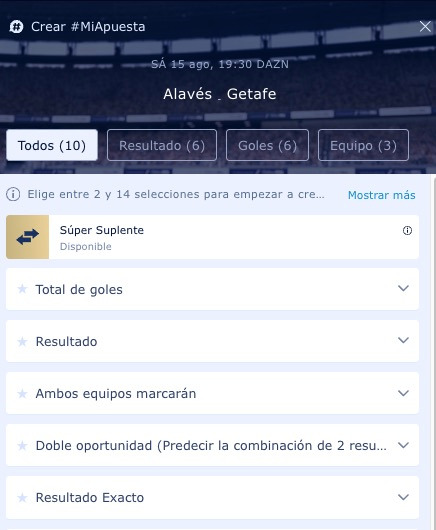
Mentioned in the previous section as one of the consequences of the rise of Player Props, the CREATE BET or Bet Builders functionality has been used for several seasons as a prominent promotion within the page itself. Mainly since the Garzón Decree prohibited improved odds and operators saw that a great way to attract attention in, for example, a specific FC Barcelona - Real Madrid match is to offer high odds that are reached by combining several events of the same match. With so much statistical data at the fan's fingertips (something that can be seen in any sports broadcast on TV), a new generation of markets is being driven
Its main attraction lies in allowing each user to design a completely personalised bet by combining different markets of the same event. The bettor stops selecting predefined bets to become the builder of his own coupon.
It is possible to combine, for example, a team's victory, a specific player's goal, a certain number of corners, cards and shots on goal within a single bet.
This format provides a strong entertainment component. The process of building the bet becomes part of the experience and significantly increases user engagement.
Just a few years ago, most markets were built on basic statistics such as goals, corners or cards. Today, operators work with hundreds of advanced metrics that allow them to offer much more specific markets.
In football it is already common to find indicators such as Expected Goals (xG), Expected Assists (xA), high pressure, recoveries, progressive passes or possession in the final third of the field. In basketball, metrics such as Usage Rate, Offensive Rating or Pace are used, while in sports such as the NFL or baseball, increasingly sophisticated analytical indicators are incorporated.
This enormous availability of data benefits both operators and users.
3- Live streaming becomes a retention tool
The integration of live video within betting platforms represents one of the most important advances in recent years. The journey has been progressive. First came the real-time scoreboards, then the Match Trackers with graphic representations of the matches and, finally, access to the streaming of thousands of sports competitions from the operator's own application.

This evolution completely modifies user behavior. Instead of switching between different apps to follow the event and place bets, everything happens within a single ecosystem.
The result is a significant increase in dwell time, a higher frequency of live betting, and a much smoother experience. While watching the match, the user can access new markets, cash out, modify their Bet Builders or react immediately to any change in the development of the match.
However, streaming also involves significant technological and operational challenges, especially in the apps available in the Apple Store and Google Play, which is where operators are investing the most, with the acquisition of audiovisual rights involves a considerable investment and the synchronization between video and data is critical. An excessive lag between the image and the quota update can lead to arbitrage opportunities and increase operational risk for the operator.

4 - Special markets expand business beyond sport
Another of the most visible trends is the expansion of markets related to non-sporting events. We have already been able to see it with La Velada del Año 6 played on the last Saturday of July in Seville, where even sports betting operators offered live odds while the fights were taking place. The availability of practically instantaneous information and the existence of much more sophisticated technological infrastructures to manage thousands of simultaneous updates without compromising the integrity of the market allow quotas to be adjusted during any event beyond football. And this increases the attractiveness of live betting in markets such as eSports, political betting or Eurovision.
It is increasingly common to find bets on political elections, film award ceremonies, music festivals, television programs, reality shows, awards ceremonies or cultural events of great impact.
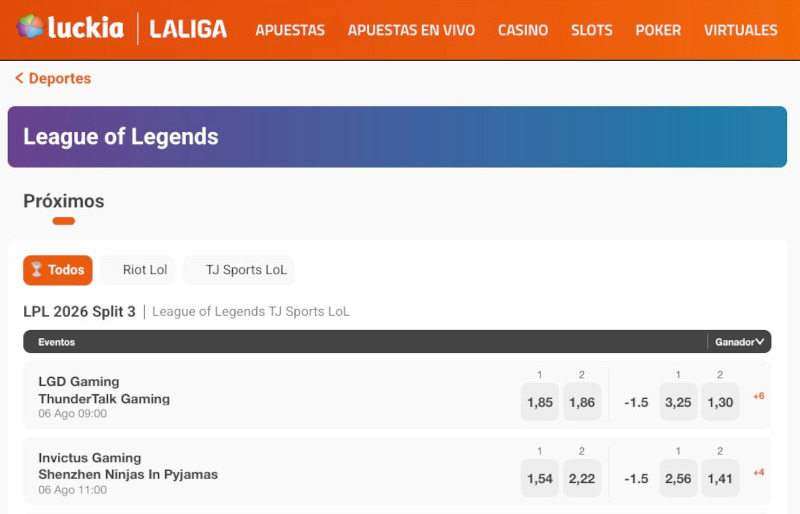
For operators, this diversification offers several strategic advantages. It reduces dependence on the sports calendar, maintains activity during periods with fewer competitions and allows attracting user profiles with interests other than traditional sports.
In addition, these markets generate a high level of conversation on social networks and tend to attract a lot of media attention, which favors their organic dissemination.
However, they also present specific challenges. Lower liquidity, limited availability of public information and the potential risk of manipulation make it necessary to take extreme control measures. Therefore, it is essential to define transparent resolution rules, robust validation procedures and specific risk management policies for each type of event.
From the betting operator to the entertainment platform
Although each of these innovations responds to different dynamics, they are all part of the core of sports betting. However, the structural transformation of the sector in Spain is oriented towards the adoption of cross-selling strategies. Something that is evident in events such as this past World Cup, where operators face an underlying asymmetry: attracting users during the tournament is very expensive, even more so when sports betting is seasonal and was going to lose much of its volume outside in the five or six weeks after this event. The online casino, on the other hand, generates uninterrupted activity and more stable margins, making it the piece that amortizes the cost of acquisition and sustains customer value in the long term.
But even more so in this World Cup, we have seen how the rise of live betting – which will concentrate more than half of the total volume of the tournament – which keeps users with the app open for extended periods (even more so because of the controversial hydration break in both halves that has turned the World Cup matches into practically an event to bet on with three effective breaks). And this has multiplied the opportunities to expose them to casino products.
The current conversion of sports bettors to recreational casino players is no longer based on generic promotions, but on the exploitation of emotional micro-moments within the game itself, which have become automatic triggers to offer free spins, mini-games or casino bonuses in a matter of seconds. Added to this immediacy is the fact that new technologies based on AI and big data make it possible to personalise the offer almost in real time and automatically discard risk profiles such as bond hunters.
Gamification – cross-missions, digital collectibles, and unified VIP programs – reinforces this bridge between verticals, and the strategy deliberately extends beyond the final, with retention plans staggered to 30 days to consolidate the gaming habit after the tournament is over.
For the 26-27 season, it is expected that cross-selling will be supported by specific casino products, beyond important protocols and explicit bonuses.
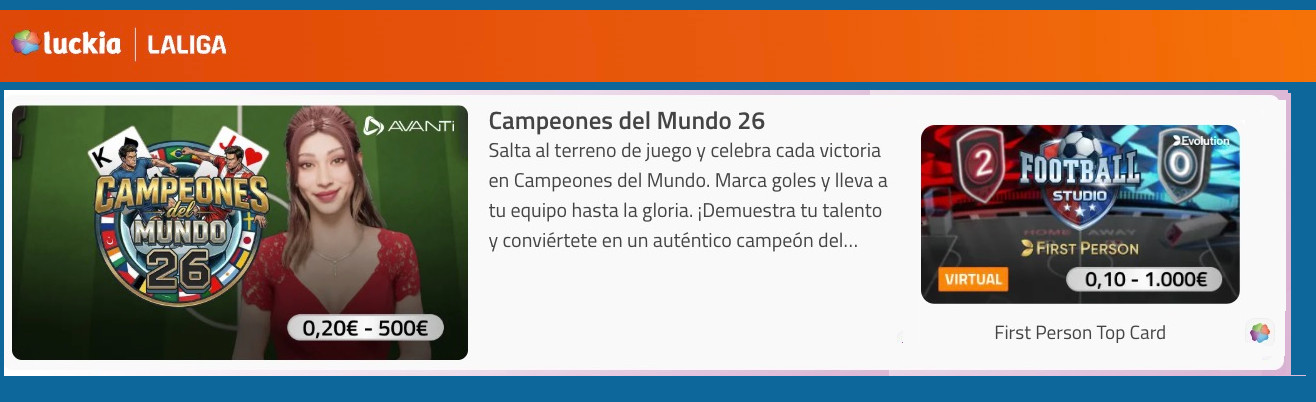
Casino game developers try to find inspiration in sports themes
In fact, the interest in some casino games (where chance decides), can also be seen in some bettors who opt for microbetting, i.e. markets focused on immediate actions of the game – the next corner, the next foul, the result of the next corner kick or certain individual events – whose resolution can occur in just a few seconds and shows much more even odds since while the final result of a football match is between Spain and Hungary may be in favor of Spain, knowing who will take the next throw-in or commit the next foul, is much more random.
For all of the above, we believe that everything points to the fact that the 2026-2027 season will exhaust functionalities that have been incorporated in recent years and no longer generate any differentiation (the insurances that give a bet a winner if certain requirements are met, the predictions or pools that serve as a contest for the bettor to predict in the matches of the day, show bets of other users or that are popular, recommended markets according to the user's tastes...) and it will consolidate more groundbreaking trends such as those we have mentioned throughout this INFOPLAY SPECIAL in August.
However, the evolution of the sports betting market in Spain will not depend solely on technological innovation or consumer tastes. Regulation will continue to condition the pace of incorporation of new products, especially when they come from international models that do not always fit into the European legal framework. In any case, competition between operators to differentiate themselves through the product is going to be a reality since there is no margin to do so exclusively through promotions or commercial campaigns