Gone are the days of traditional sponsorship deals, yet football remains a prime advertising channel for online gambling operators. After the Spanish Supreme Court ruling, marketing budgets have also shifted toward influencers, gamers, YouTube channels, TV shows...—reshaping how the beautiful game is used as an advertising platform.
As with every new season, the online gambling industry is once again making its presence felt in Spanish football for 2025–2026. Yet the days of flashy shirt sponsorships with the country’s biggest clubs are long gone. Soaring costs driven by fierce competition, the rise of social media, the push for responsible gambling, and the reinvention forced by the Garzón Decree (Royal Decree 958/2020) have made football sponsorship a
true test of adaptation and survival.
In the next sections, we’ll look back at the evolution of online gambling sponsorship in Spain—from the entry of bwin and 888 into football before regulation, to the opening of the legal market, the sponsorship boom, and the diversification into eSports, influencers, regional partnerships, and digital content. The 2024 Supreme Court ruling has become the key turning point that ensures gambling advertising remains present in the beautiful game.
STAGE #1 – Leading Brands on the Shirts
In the mid-2000s, Spain experienced a phase of uncontrolled advertising growth in the online betting sector. This was logical given the lack of regulation and the surprising expansion of brands such as betandwin (bwin), 888.com, or miapuesta. Operators like these flooded Spain’s First Division with multi-million sponsorships on team shirts. The most paradigmatic case was bwin,
which in 2006 placed its logo on the Real Madrid and AC Milan jerseys, achieving unprecedented global media exposure for a company in the sector.
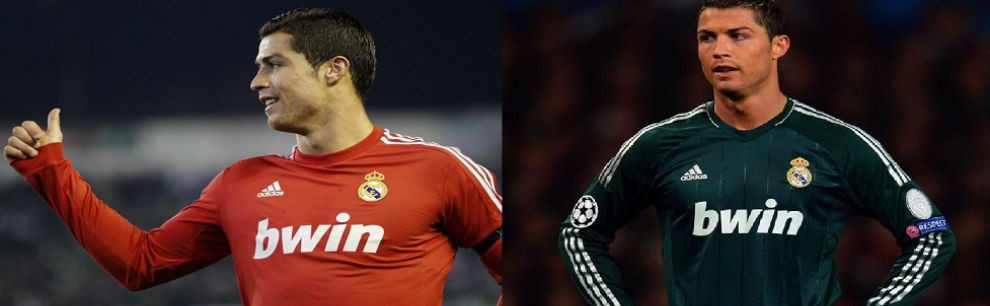
In those years, the absence of a specific legislation allowed complete freedom to advertise, with million-euro contracts negotiated directly with clubs and competitions. It was a golden era for visibility, where football was the perfect showcase and brand association with winning teams multiplied awareness—even without activations or marketing support, as happened with 888.com’s sponsorship of Sevilla FC. However, this stage also triggered the first political and social concerns, which would eventually lead to the Gambling Regulation Act 13/2011.
STAGE #2 – Regulation Arrives
With the entry into force of Law 13/2011 and its regulatory framework, operators now needed a license both to operate and to advertise. This brought a degree of order to the sector, but also introduced formal restrictions that reshaped how sponsorships were carried out. Gambling brands remained present in football, but had to adapt their messaging to the new rules. Bwin continued sponsoring clubs such as Valencia CF and competitions like the UEFA Europa League, while new players emerged—Bet365, Sportium, Botemania, Codere, and William Hill—also investing heavily in advertising through stadium boards and LED displays.
Visibility remained high and even expanded into new formats, including collaborations with some of football’s first influencers. Betfair, for example, partnered with content creators like Julio Maldonado “Maldini” and former football star Rivaldo. Yet, with mounting pressure from anti-gambling groups and an increasingly competitive environment fueled by the arrival of more operators, the cost of sponsoring top-tier clubs skyrocketed.
Still, the sector showed resilience, maintaining deals that went beyond shirt sponsorships to include digital platforms, official apps, and exclusive fan content. Football remained the epicenter, but it was becoming clear that diversification would be necessary in the future.
During this period, brands like Winamax, Marathonbet, and Betway gained visibility, while operators such as Sportium and 888 struck sponsorship deals with major competitions, including LaLiga and Spain’s ACB basketball league.
STAGE #3 – The Garzón Decree
The major shake-up came with Royal Decree 958/2020, known as the Garzón Decree, which came into effect in 2021. By restricting audiovisual gambling ads to the 1–5 a.m. time slot and banning sponsorships on shirts and stadiums, it delivered a direct blow to operators’ marketing strategies.
Within months, football ceased to be a viable commercial platform for online gambling. Clubs were forced to find new sponsors, while betting companies shifted their budgets toward less regulated channels such as targeted digital advertising and affiliate marketing. It was a period of forced transition: mass visibility collapsed, but operators found fertile ground online and on social media to reach their target audience—especially the young, digital-native demographic.
Although revenues from sports sponsorships fell sharply, total online advertising investment remained surprisingly strong, proving that the sector was far from giving up.
STAGE #4 – A Lesson in Survival and Adaptation
The landscape shifted again in May 2024, when Spain’s Supreme Court partially annulled the Garzón Decree. The ruling allowed the return of certain advertising formats, including the use of celebrities, influencers, and welcome bonuses. It wasn’t a full return to the pre-2021 era, but it did open a creative window that operators quickly seized.
Advertising spend rebounded, reaching—and in some cases exceeding—levels seen before the decree. While direct shirt sponsorships in football remain restricted, operators have multiplied their presence across digital environments and related events. Competition for these spaces is fierce, with skyrocketing prices driven by demand, forcing operators to refine their strategies to maximize ROI.
In this battle, private operators face an unusual rival: the Spanish state itself and ONCE (Spain’s national lottery for the blind), which, free from the same restrictions, compete for players across many of the same channels.
What’s clear is that in less than two decades, operators have gone from covering football shirts with logos broadcast in prime time, to reinventing their communication channels after a cascade of regulatory restrictions.
And they have done so in several ways, which we will analyze in the following section...
SPONSORSHIPS TODAY: BEYOND THE SHIRTS
Sponsorship and football betting today are far more subtle than in the past. It’s no longer about oversized logos, but rather about mentions, banners across major sports media outlets and specialized websites (focused on results, statistics, or fantasy games), or the integration of products within the content narrative. Successful examples include betting operators securing a presence in entertainment channels with loyal audiences such as podcasts, radio shows, YouTube channels specializing in predictions, and live sports streams—formats that have become powerful new advertising platforms.
Naturally, operators also invest in their own branded content, such as
bwin’s El Testarazo or
Codere’s MisterUnderdog, along with dedicated sports analysis shows.
This visibility, while less flashy than having a logo on a La Liga shirt, is steady and helps build a relationship of trust with audiences.
That said, as the 2025–2026 season begins, we can still see football clubs associated with betting brands thanks to sponsorships outside Spain. Current restrictions only apply within Spanish territory and to operators holding a Spanish license. In markets with less strict limitations—or where regulations allow gambling advertising in sports—operators are free to display their logos and activate large-scale campaigns.
The standout examples in 2025 are:
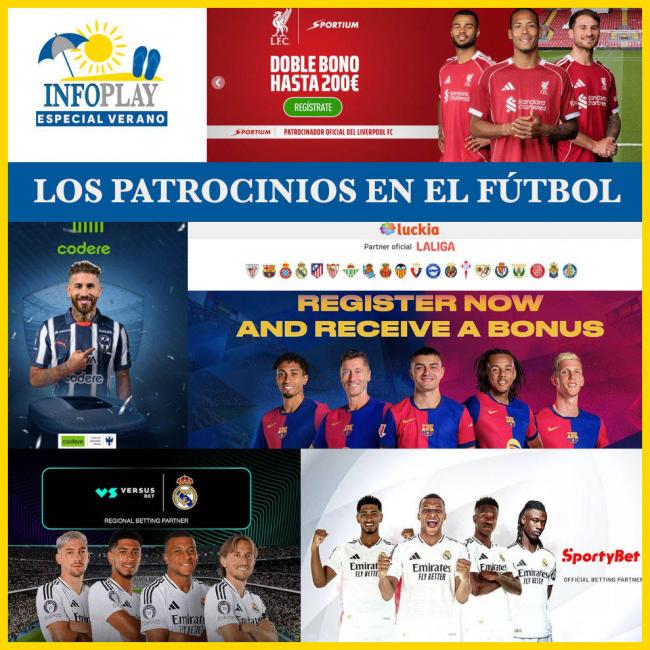
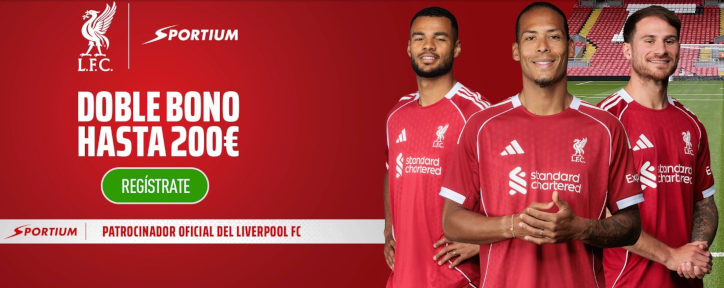
The UK still allows betting sponsorships (although the Premier League will ban front-of-shirt deals starting in 2026), and Sportium has turned the reigning English champions into its flagship partner in the world’s biggest sport.
With their eye-catching logos displayed on Latin American clubs such as River Plate or Rayados, operators are leveraging their legal presence in Argentina and Mexico—markets where these sponsorships are still allowed. In fact, the practice is widespread, with nearly all clubs in Brazil and Argentina showcasing gambling brands that are licensed to operate in their territories.
Major competitions also continue to partner with betting companies. Examples include
Admiral in Austria’s Bundesliga,
Betclic in Portugal’s Liga, and the more local case of
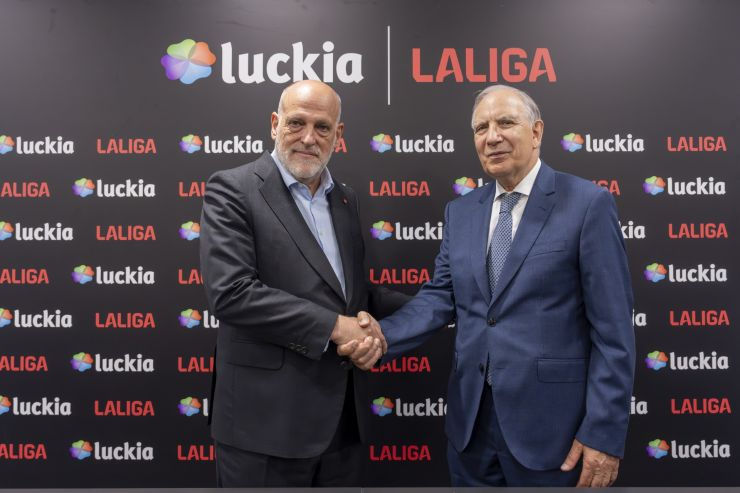
Luckia, which serves as the official betting partner of LaLiga EA Sports.
Sponsoring outside Spain provides brands with global visibility, especially through TV audiences and social media reach—even within Spain, where direct advertising is restricted. This also creates an international echo effect when clubs compete in continental tournaments, allowing operators to achieve aspirational positioning by associating with iconic teams, even among Spanish customers.
Conversely, some operators licensed in Spain, such as
VERSUSbet (the sports betting and online casino brand of Grupo Orenes), have signed multi-year strategic alliances with top Spanish clubs. In this case, VERSUSbet became a Real Madrid sponsor across the entire European market—except within Spain itself.
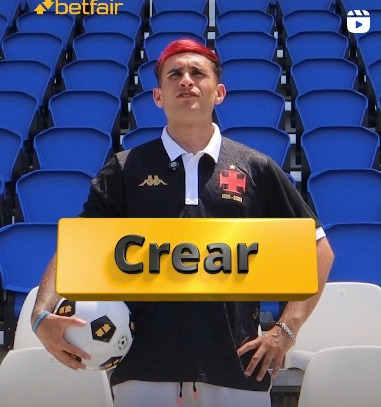
Another powerful avenue for operators has been partnering with content creators specializing in video games and sports. Betting brands such as
Betfair have turned influencers like Delantero09 into perfect ambassadors, complementing the presence of former football legends like Luis Figo or Rivaldo, who also promote the brand.
As we’ve seen, the evolution of online gambling sponsorship in Spain is a story of creativity. From bwin’s omnipresence in the pre-regulation era, through the forced reinvention brought by the Garzón Decree, to the digital expansion after the Supreme Court ruling, the sector has shown a remarkable ability to adapt and thrive. Today, gambling brands are not only present in stadiums but also on leading streaming platforms—for example,
Luckia on Netflix.
As in many other industries, the future of advertising and sponsorships will depend on whether regulation can strike a true balance: ensuring fair competition while allowing private operators to keep innovating without carrying burdens that others don’t face. In the meantime, brands are no longer just on shirts or on the pitch—advertising is reinventing itself, and the game goes on…
18+ | Juegoseguro.es – Jugarbien.es