Online poker is undergoing a silent crisis in Spain, marked by a decline in players, low retention, high taxation, and a lack of adaptation to modern digital consumption. While global poker continues to grow, in Spain there are local factors beyond restrictive regulation that worsen the product's situation, also impacting live poker.
For several years now, we've been hearing that “online poker is dead” or at least that “the online poker model is exhausted.” Not necessarily as a game, but as a phenomenon capable of renewing and expanding the number of players in Spain's regulated online gambling market. In fact, even before regulation (2012), poker had already become a spectacle, and as an industry (both live and online), it managed to attract new generations of fans to card games and the emerging world of online entertainment and gambling platforms.
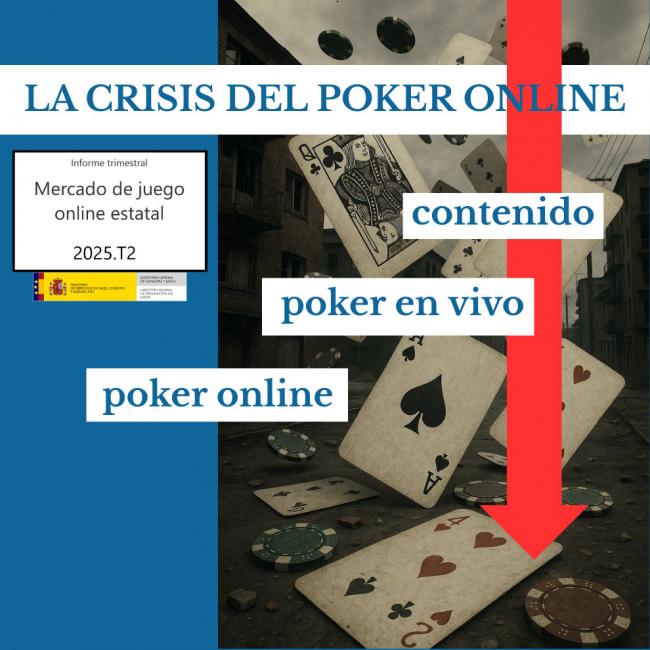
But as we’ll see below, the quarterly data published by the DGOJ clearly shows that online poker is losing relevance in Spain. At INFOPLAY, we’ve set out to identify the possible causes, analyzing the three key dimensions of the phenomenon —content consumption, online poker, and live poker— to determine where the greatest drop in interest lies.
The Context of Regulated Online Poker
Poker became a mass phenomenon following the explosion of online poker in the early 2000s in the United States. Televised events (WSOP, World Poker Tour, High Stakes Poker), the “Moneymaker effect,” the rise of online satellite tournaments, and the arrival of digital platforms that allowed players to compete for small stakes or even for free (freerolls) with real prize potential. That combination of accessibility, storytelling, glamour, and visible skill (hole cards shown during broadcasts, big bluffs and spectacular hands) created a culture that transcended casual gameplay and even overshadowed sports betting and casino games.
However, over time, most countries chose to downplay poker’s uniqueness and effectively equated it with games of chance. As a result, in regulated markets across Europe, the United States, and parts of Asia, online poker faced serious challenges: new laws, platform restrictions, taxes, and trust and security issues. This reduced the offering or forced platforms to adapt. Live poker also suffered: costs, health regulations (like during the pandemic), and the need for physical infrastructure that imposed greater barriers than playing from home.
In any case, since the DGOJ began
publishing quarterly reports, the two poker verticals with individual licenses in Spain (cash games and tournaments) have seen significant fluctuations. Particularly over the past year, their contribution to the GGR has notably declined, losing ground to casino games, slots, and sports betting. Currently, only 8 operators offer online poker in Spain (PokerStars, Winamax, 888poker, PartyPoker, Betfair, Sportium, CasinoBarcelona, and bet365), with
Winamax and
PokerStars accounting for nearly 90% of the traffic.
Current Situation in 2025
Although the second quarter 2025 data just released by the Dirección General de Ordenación del Juego leaves no room for doubt (poker as a segment contributed just €19.11 million to Spain’s total GGR, representing only 4.66%), and despite the clear decline in activity and a drop in active players, these are local figures that contrast with much more optimistic global projections.
A study by
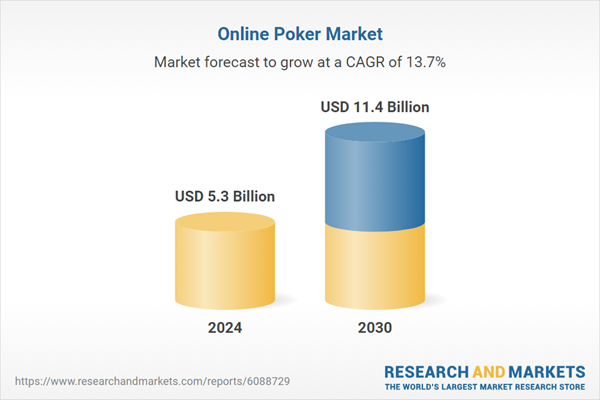
Grand View Research estimates that the global online poker market was valued at $3.86 billion in 2024 and projects it will grow to $6.9 billion by 2030. Another report by
ResearchandMarkets puts the base figure even higher, at $5.3 billion in 2024 with a forecast of $11.4 billion by 2030 — both with annual growth rates above 10%.
This contrast shows that the decline does not stem from a structural online poker crisis at the global level, but rather from local factors —regulation, taxation, operational restrictions— that hinder the competitiveness of the Spanish market. While the global market expects jumps from $3.86 billion to $6.9 billion, and others from $5.3 billion to $11.4 billion, Spain is struggling to maintain volume in a legislative and fiscal environment that is far from favorable.
This contrast shows that the decline is not the result of a structural online poker crisis at the global industry level, but rather of local factors —regulation, taxation, operational restrictions— that hinder the competitiveness of the Spanish market. While the rest of the world projects growth from $3.86 billion to $6.9 billion, or from $5.3 billion to $11.4 billion, Spain is struggling to retain volume in a legislative and fiscal environment that is far from favorable.
This suggests economic and player base growth, but not necessarily linked to more engaged or passionate players. Instead, it's driven by factors such as the legalization of online poker in Asian, Latin American, and African markets; as well as the adoption of online poker in crypto casinos and formats like sweepstakes.
In any case, the trends observed in Spain are also shared across most regulated European markets, where there is a gradual decline in relevance —though not a sudden collapse. We will delve deeper into the reasons behind this situation in the final section, but if we are to argue that the online poker business has deflated, we must consider three independent areas in context:
- Poker Content
Content related to poker —mainly audiovisual— is currently experiencing clear
saturation. The proliferation of videos, streams, reviews, and strategic breakdowns has led to a homogenization that impacts both viewer interest and engagement. Terms aimed at advanced players such as GTO, solvers, or “how to beat the solver” are repeated ad nauseam by creators who, in many cases, fail to offer new or differentiating perspectives. This increasingly technical and insular loop has pushed away casual audiences, who find today's content less accessible and lacking aspirational appeal.
Moreover, platforms that once promoted poker content —like YouTube, Twitch, or Kick—
no longer prioritize it in their algorithms due to legal restrictions on advertising gambling brands, which drastically limits its organic visibility.
With few new narratives (the most appealing format in Spain currently —though already somewhat repetitive— are live-streamed games between influencers and poker players) and no charismatic figures capable of captivating younger audiences, like Phil Ivey, Leo Margets or Daniel Negreanu once did, poker has lost its ability to connect with new generations.
The problem is made worse by the poor adaptation to modern digital consumption by both operators and affiliates. Much of today's poker content remains long-form, dense, and overly academic —a poor fit for the fast-paced formats dominating platforms like TikTok, Instagram Reels, or YouTube Shorts. And in the case of agile, visual, emotional poker microcontent (like JakePokerVegas), trends are quickly copied and overused until they lose their impact.
- Online Poker
While this will be the focus of the next section, it's already clear that online poker today faces a deeply transformed environment. The widespread use of advanced tools —like solvers and hand databases— has significantly raised the bar for those wishing to compete at a serious level. What was once an accessible skill game has become almost a technical discipline, where preparation and software use are decisive. On top of that, there's growing frustration over real-time assistance (RTA) and the exponential increase in operator fees (rake).
- Live Poker
Live poker undoubtedly remains vibrant at large-scale events like the World Series of Poker —which continues to break participation records and reinforce its global appeal— and national circuits like the CNP or the CEP. This is despite rising logistical costs, legal and health restrictions (during the Covid period), and competition from other hybrid or digital entertainment options, all of which could have impacted casino poker rooms in Spain, which have managed to stay active.
Still, although most players report enjoying both live and online play, only a minority choose to play exclusively in live formats. This suggests a lack of sustained commitment to the more traditional version of the game and a continued dependence on online traffic, which often provides qualifiers and packages to participate in live events.
Neymar, one of the few global ambassadors of poker (PokerStars)
In any case, the rising costs have forced increases in buy-ins, which reduces accessibility and excludes more recreational profiles or those with lower purchasing power. In this context, the spectacle and excitement of live poker remain irreplaceable, but its sustainability increasingly depends on large events sponsored by or supported by online operators, rather than the grassroots ecosystem that traditionally fed the national poker scene. By extension, a collapse of online poker would have repercussions on the live circuit.
The Reasons for This Silent Crisis
Although more could be pointed out, in our analysis we identify five factors that would explain the current situation of online poker, which is reaching historic lows in Spain:
- A complex retention problem
Although clearly in 2020, 2021, and 2022 there are reports indicating that growth in the number of online players is a reality, online poker rooms know that many players join, test, then drop out. Low retention and high churn prevent the player base from solidifying across all levels and new modalities. The slowdown in audience and traffic growth is a major issue, largely caused by the disappearance of loyalty systems or —for regulatory reasons— their exclusivity for those over 26 years in Spain.
Large operators and digital affiliates that have invested in infrastructure, streaming, marketing and technological development may continue to generate profits, but attracting new players and maintaining constant interest incurs high costs, and the innovation challenges that characterized the second decade of the century (2010–2020) are no longer as relevant.
Focusing on the Spanish case, although 100% bonuses up to €200 are standard welcome promotions, unlocking them is complicated for beginners. Although the operator matches the first deposit with a poker bonus of up to €200, it will be unlocked in €5 increments for every 30 or 40 loyalty points the client earns by playing any real money poker modality. And to get those loyalty points, the player must generate at least €1 in rake or commission.
For that reason, from both the operator’s and the player’s point of view,
sports or casino bonuses are prioritized.
- Poker as an entry point to casino
Using the welcome bonus example, it becomes clear that poker has ceased to be a commercial priority for most platforms offering it, becoming a secondary product whose purpose is to attract users and redirect them toward more profitable verticals such as sports betting and casino games. This cross-selling logic is evident in the kinds of promotions active in the market: while bets receive constant incentives —like enhanced odds, accumulator offers, or promotions tied to goals or substitutions— poker specific promotions are increasingly rare.
PokerStars has shifted from “the poker house” to “the gaming house.”
The
Winamax case in France and in Spain is illustrative by contrast: lacking a casino license, their focus remains poker (or at most is supplemented with sports betting promotions), which allows them to maintain an active community and a coherent product offering. In contrast, operators like Sportium, Bet365, Betfair, PokerStars or 888Poker increasingly direct their efforts to pushing players from poker tables to slots, roulette, or prematch betting — much more lucrative in terms of operating margin. This results in a less competitive offer for poker players, and consequently, less loyalty and sustained traffic decline.
In short, poker is not merely losing weight due to a shift in user preference or trend, but because market conditions and business decisions are relegating it to an instrumental role within the online gaming ecosystem.
- Problems in product evolution
In an era of fast content evolution, some game types (deepstack tournaments, full ring tables, traditional sit & go, Stud variants) are decreasing in interest. The generational shift toward more instant entertainment (video games, esports, streaming platforms not tied to deep strategic games) forces the creation of different variants — something that was achieved with fast-fold games or sit & go with random pots.
But overexposure fatigue and the idea that poker “is no longer what it used to be” due to constant innovations that add casual or random elements to the game have made the aspirational or advancing player face a hostile environment. Meanwhile newcomers may lose their bankroll in a few sessions due to excessive rake and lack of rakeback campaigns (commission refunds).
Legislative pressure has had a direct, quantifiable impact on the online poker player base, especially since the implementation of national regulations that do not recognize the activity as a legitimate source of income. The inability to deduct losses —a crucial aspect in a high variance game like poker— has forced many professional players to migrate to more favorable jurisdictions such as Andorra, Malta or the UK. This outward migration not only reduced liquidity in local tables, but also weakened the competitive and recreational ecosystem of online poker in Spain.
Internationally, tax pressure has also intensified. Beyond the Spanish case, a recent example is the approval in the U.S. of the “
Big Beautiful Bill Act” in July 2025, introducing tax reforms that directly affect professional players and bettors. This type of legislation creates an environment of uncertainty and lower profitability, disincentivizing sustained and professional participation on regulated platforms. Players, faced with disproportionate tax burdens, seek alternatives outside regulated frameworks or abandon the activity altogether.
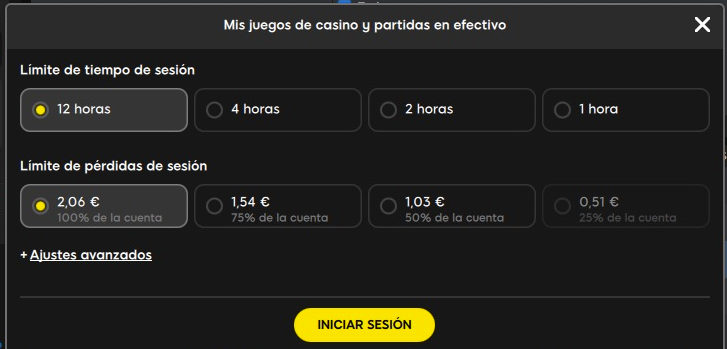
Additionally, returning to Spain, operational restrictions imposed since 2023 —such as mandatory limits in cash game sessions (see image below) and advertising limitations— have reduced both the acquisition and retention of new players.
Form to be filled each time a cash game session is started at regulated operators
These measures, although motivated by consumer protection objectives, have contributed to a structural decline in game volume. In aggregate, regulatory and fiscal pressure has not only expelled talent, but eroded the base of recreational and semi-professional players, compromising the sustainability of the regulated online poker market.
Beyond the reasons: the impact of unlicensed platforms
There is one last issue that deserves separate mention, because it transcends the dynamics of poker itself and directly affects the health of the sector: the proliferation of online poker rooms without a license that are openly promoted on the internet. Even from Spanish forums, news portals, and social networks.
Unlike the five previous reasons —more linked to social, legal, cultural, or product trends— here we are talking about a structural problem, which erodes trust in regulated gambling and conditions the public’s perception, as we have been denouncing for a long time.
These illegal platforms, which operate outside of any regulatory framework, offer aggressive promotions and although officially they do not direct their marketing efforts to Spanish players, they continue to attract a huge number of Spaniards who see that, in order to play the WSOP Online 2025 and aim for a bracelet and the guaranteed million-dollar prizes of its events,
GGPoker is the only room through which they can participate. A room that does not have a license in Spain but that has as an ambassador and Team Pro a renowned Spanish player and poker influencer.
Hundreds of Spanish professional poker players and thousands of those considered recreational are estimated to have an account at GGPoker, a room that not only competes unfairly with regulated operators, but also does not have player protection measures and control mechanisms like those existing in regulated markets.
18+ | Juegoseguro.es – Jugarbien.es