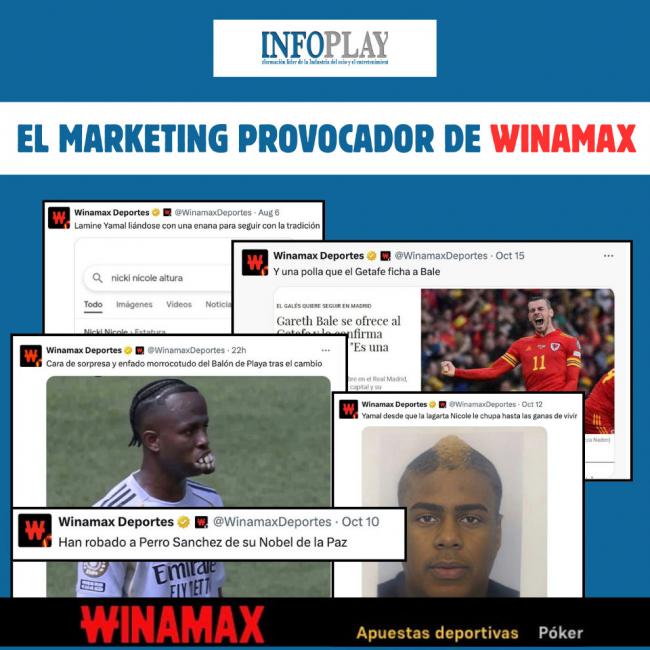
There is no doubt: Winamax gains visibility with provocations on social media, but at what cost? We analyze how its strategy may harm all regulated gambling and review some of its most controversial messages.
* Notice to the reader:
This article echoes real communication campaigns by Winamax which, in some cases, include foul language or provocative references. Their mention responds to a critical analysis of advertising strategies in the gambling sector, not to their promotion or validation.
It is well known that in almost any sector, companies decide to adopt provocative communication strategies, especially on social media. And in our closest reality, one of the online gambling operators regulated in Spain is one of the most visible examples of this approach: Winamax Sports.
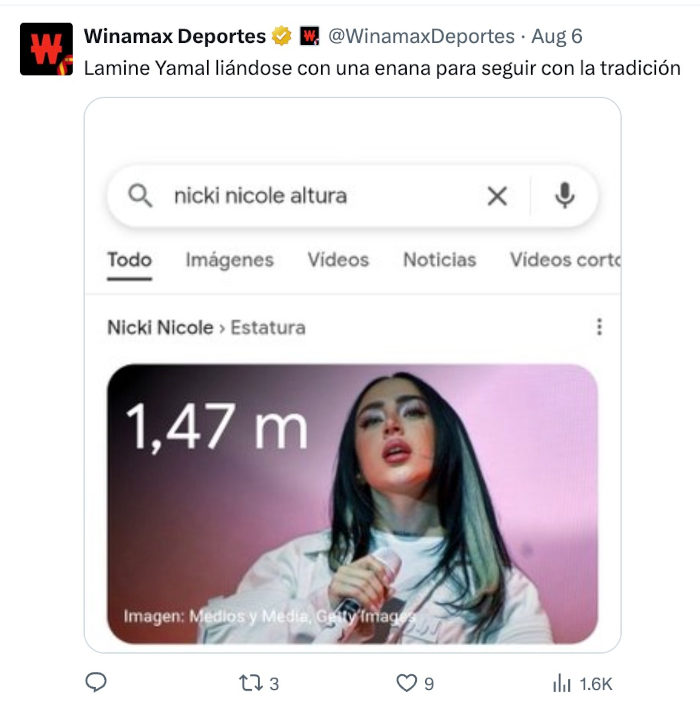
In this article, based on the latest tweets related to El Clásico (with Lamine Yamal and Vinicius Jr. as protagonists), we analyze the irreverent and provocative style that has generated notoriety, but also tension in a regulated environment, in order to try to answer the question of to what extent their strategy —although legitimate— may be harming the sector as a whole.
Provocative marketing: “mischief marketing”
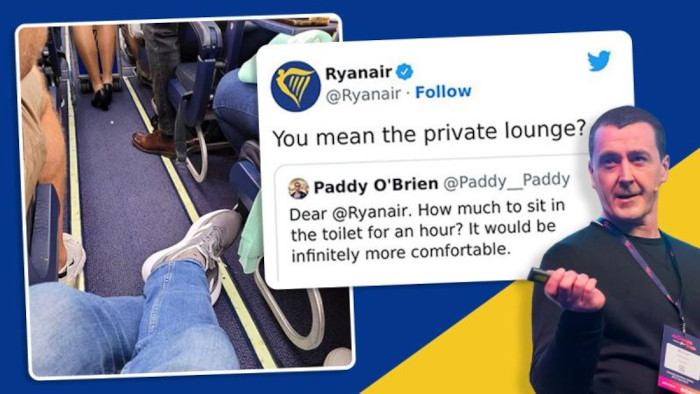
Provocation as an advertising tactic is not new. Companies such as Ryanair have built their digital identity on the basis of controlled scandal: aggressive irony, dark humor, and offensive comparisons as a way to differentiate themselves and reduce advertising costs.
This type of communication, known as mischief marketing, seeks to “make people talk about you” at any cost, generating virality without large budgets.
And in the gambling sector, the use of this approach is especially risky because it is a regulated industry, with a paradigmatic example in the figure of PaddyPower, especially in its early period of market positioning in Ireland and throughout the United Kingdom, showing that provocation can be effective if managed with intelligence and creativity: bets on controversial topics, irreverent messages, and communication that becomes part of the sporting spectacle gave them visibility and notoriety… at the cost of periodically facing regulatory authorities.
The Winamax case: visibility by tweet
Winamax Sports (in its poker vertical they have not chosen this path) has followed that trail with an intensive social media strategy, especially on Twitter/X.
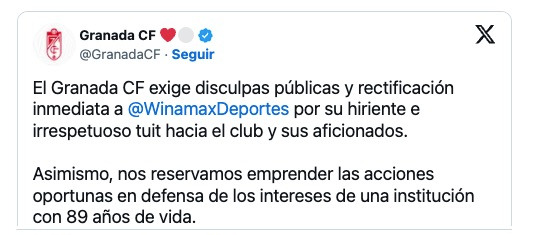
In France, it has been the protagonist of several controversies: in 2020, a tweet with homophobic language provoked the intervention of the Minister of Sports; in 2022, the Autorité Nationale des Jeux (ANJ) demanded the withdrawal of its campaign “Tout pour la Daronne” for presenting gambling as a path to social advancement. It even lost a sponsorship with Girondins de Bordeaux for mocking the club on social media, something that was repeated in Spain when Winamax sponsored Granada CF.
And since its arrival on the Spanish regulated market, the brand has replicated part of that approach, especially in the sports betting vertical, taking advantage of sports content. Its X account dedicated to sports constantly publishes with an ironic, biting, almost mocking tone.
Although it has not yet been publicly sanctioned, its style radically contrasts with the institutional tone that dominated among regulated operators. This allows them to stand out among competitors with less digital visibility.
But the problem is not only about form. In a sensitive market under public scrutiny, the repeated use of sarcasm or mockery can erode the image of responsible gambling. Each controversial post does not only affect the brand that launches it, but the collective perception of the sector, especially in times when tasteless jokes or biased comments are quickly associated with discriminatory treatment or even hate speech.
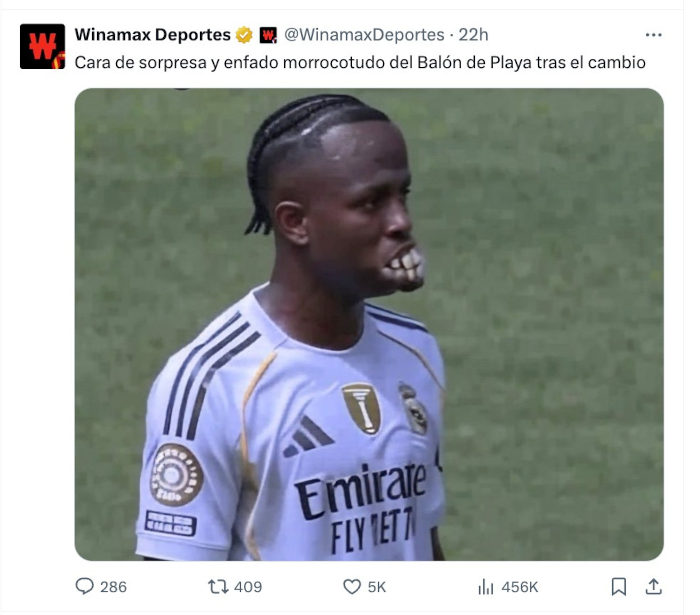
The tweet about Vinicius (see below) and the footballer’s reaction when being substituted in the last Clásico on Sunday, October 26, reminded some of the most controversial messages of the past with athlete Ana Peleteiro or the Moroccan national football team as protagonists, which, incidentally, caused one of the most important eSports teams on the international scene (GIANTX) to break off its sponsorship with Winamax.
Spain: strict regulation, but with gray areas
Since 2020, online gambling advertising in Spain has been regulated by Royal Decree 958/2020, which imposes
severe limits on traditional media: restricted time slots, bans on general sponsorships, and message limitations. Article 9 requires social responsibility; Article 11, to avoid messages reaching minors; Article 26, specific restrictions for social media.
However, this control is diffuse when it comes to measuring tone and the use of irony or foul language in social media communications. This creates a
gray area that operators like Winamax have known how to exploit, arguing that they are within the regulated framework (safe gambling messages, control of minors, suggesting social success, glamorizing gambling, targeting minors) and that provocation itself is not prohibited.
In any case, it seems evident that this tone is intended to connect especially with
young audiences, who are more active on social networks…
In addition, it should be noted that the recent partial annulments of the decree by the Supreme Court and the fact that
Winamax does not have a casino or slots product may encourage its marketing managers to advocate for more aggressive strategies that challenge the limits.
Beyond sector-specific regulation, more generic legislation (General Advertising Law, Unfair Competition Law, Law on Information Society Services (LSSI), the Criminal Code) can perfectly well punish publications that constitute insults, slander, or crimes against honor. Even the Organic Law on the Protection of Honor and One’s Own Image could be triggered if a person or group is publicly ridiculed.
In this sense, the racist attacks suffered by player Vinicius Jr., such as the chants of “monkey” or the hanging of a doll with his image, are not limited to the sporting arena, but are regulated by Spanish legislation. In these cases, the Criminal Code may apply, specifically Article 510, which punishes hate crimes motivated by racism or xenophobia, and Article 173.1, which sanctions degrading treatment.
Therefore, although humor can be an effective advertising tool, its use by brands must be carefully controlled so as not to cross legal boundaries. Companies must avoid messages that can be interpreted as offensive, discriminatory, or damaging to the image of other people or entities. If those limits are exceeded,
Winamax or any other brand may face financial penalties, civil lawsuits, or even criminal proceedings.
Side effects: can it harm the sector as a whole?
Here lies the key question.
Winamax may be playing a legitimate card from a marketing point of view, but its effects go beyond its own Twitter / Instagram accounts. In regulated sectors, when one operator crosses the line —even if just “at the limit”— it can provoke a regulatory reaction that affects everyone. In fact, this has happened in other European markets: after controversial campaigns, the regulator has tightened conditions for all operators, including those who did not participate in the controversy.
Something similar happened in Spain with the
888.es advertisement starring
Carlos Sobera, which, although it was duly fined for contravening the Code of Conduct, by showing repetitive gambling situations and a sense of loss of control, intensified the general crusade against advertising in the sector.
Moreover, the repeated use of provocative messages can associate online gambling with frivolous or disrespectful attitudes, precisely at a time when the sector needs to show responsibility and social commitment. This can also make it difficult to collaborate with sports entities, media outlets, or events that seek brands with a clean image.
In fact, several mainstream media whose editorial line is against gambling have already published articles dedicated to Winamax, extrapolating the case of Winamax to the entire regulated online gambling sector (see the
article in El Plural on this subject).
Finally, there is an indirect reputational risk for land-based gambling. Gaming halls, betting shops, or bingo halls operating under the same brands could be affected if public opinion associates those companies with mocking or irresponsible strategies. The digital channel increasingly impacts the overall perception of gambling as an industry.
18+ | Juegoseguro.es – Jugarbien.es